Notice: Function _load_textdomain_just_in_time was called incorrectly. Translation loading for the founder domain was triggered too early. This is usually an indicator for some code in the plugin or theme running too early. Translations should be loaded at the init action or later. Please see Debugging in WordPress for more information. (This message was added in version 6.7.0.) in /home1/karlfitz/public_html/aileenfitzke/wp-includes/functions.php on line 6131
Pastoral Care – Aileen M. Fitzke
Deprecated: Function WP_Dependencies->add_data() was called with an argument that is deprecated since version 6.9.0! IE conditional comments are ignored by all supported browsers. in /home1/karlfitz/public_html/aileenfitzke/wp-includes/functions.php on line 6131

Deprecated: Function WP_Dependencies->add_data() was called with an argument that is deprecated since version 6.9.0! IE conditional comments are ignored by all supported browsers. in /home1/karlfitz/public_html/aileenfitzke/wp-includes/functions.php on line 6131
Skip to content →

Pastoral Care

I believe that Pastoral Care is one of the most important roles of a minister, being able to deeply listen and respond to the needs of others. My most profound experiences of pastoral care came in the context of my Clinical Pastoral Education (CPE) training at Upstate University Hospital in Syracuse, NY. I found myself assigned to the Neuro ICU unit. I was confronted almost daily with patients and their families whose lives had been drastically changed, sometimes literally, overnight. I learned to respond to acute trauma and to sit with those who were making life altering decisions. I learned to sit with death, both literally and figuratively, exploring my own mortality while helping others cope with theirs.
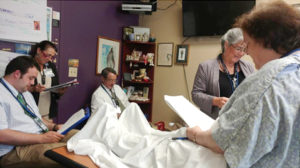
 

CPE colleagues working in hospital room
Working with my CPE colleagues
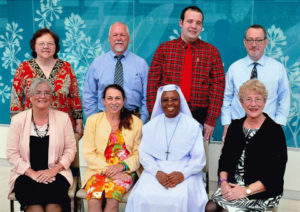
Syracuse Hospital CPE Cohort 2017
My CPE Cohort


In the congregational setting, sitting with and deeply listening to the concerns and challenges of individual members allows me to cultivate meaningful connections and relationships.  Visiting, sending emails,  cards and flowers, having phone conversations and texts are some of the ways I mark connection with my congregants who need extra care

Print Friendly, PDF & Email